
I just finished up a grant funded professional development experience, Designing Forward: Reimagining Instructional Design for Cluster Learning. The focus of this work was on emergent instructional design. We began our work in May with an in-person event to help us to orient to this work and then over the summer we selected modules of interest to learn about these ideas. We connected at the start of this semester and designed an emergent syllabus for how we wanted to continue our work throughout the fall. The organizers supported our work by developing programming situated on the ideas we decided to focus on in our individual syllabi. In December, we came back together for another event to discuss what we learned and how we might move forward with the next iteration of this professional development experience.
My goal coming into this work focused on learning more about how to support students in emergent project-based courses. All my courses include an element of this work but the two I think about the most are the bookends to our general education program, Tackling a Wicked Problem (TWP) and Signature Project. I decided to focus on my section of TWP for this work. This course is for first year students. The goal of this experience is for students to learn about the Habits of Mind, the learning outcomes of the general education program and to gain opportunities developing these skills by engaging in project-based learning. My course focuses on the wicked problem of social connection. This fall was the second time that I offered this topic and after my first iteration of the course, I knew there were several things that I wanted to change to help guide students in this work.
One thing that I decided to do was to focus on strengthening students’ understandings of the importance of social connection. My thought was that if students knew more about the complexity of this problem and potential ways to address the epidemic of loneliness that this might help them with their project work later in the semester. There were several ways that I addressed this element this fall. First, I added a new text to the class, Connections Are Evertyghing: A College Student’s Guide to Relationship-Rish Education. This reading provided students the opportunity to consider how they can connect with others as they make their transition to college. To help the students discuss these ideas, we used literature circles where students prepared for these small group conversations by selecting quotes, connections, and answering questions from the authors. They used these ideas as a starting point for their in-class discussions. From our conversations and from reading the students’ reflective pieces, I noticed that they were connecting these ideas more directly to their lives since this text points to concrete ways to find connection in the college environment.
Another change I made related to the way we approached the reading, Our Epidemic of Loneliness and Isolation. I wanted students to think more deeply about this work. To help students prepare for these discussions, we used Teams to write posts of our initial thoughts about this content. Students could write anything related to the reading or use the suggested prompts to highlight key ideas from the resource. See below an example for the first chapter.
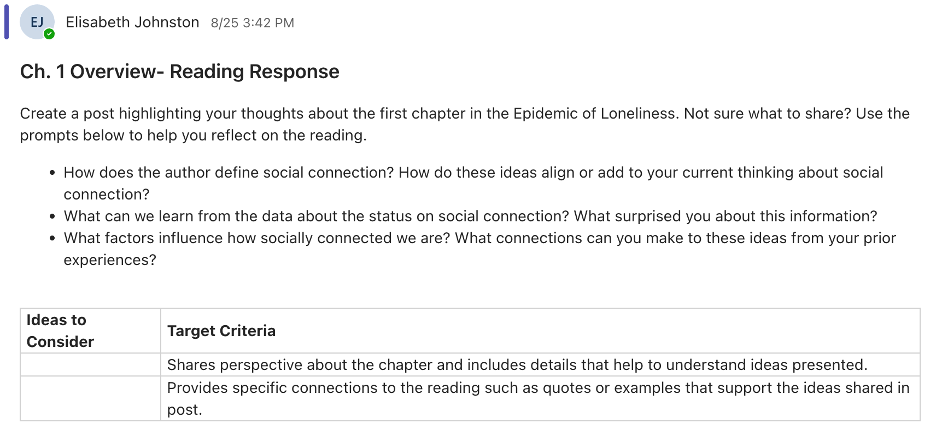
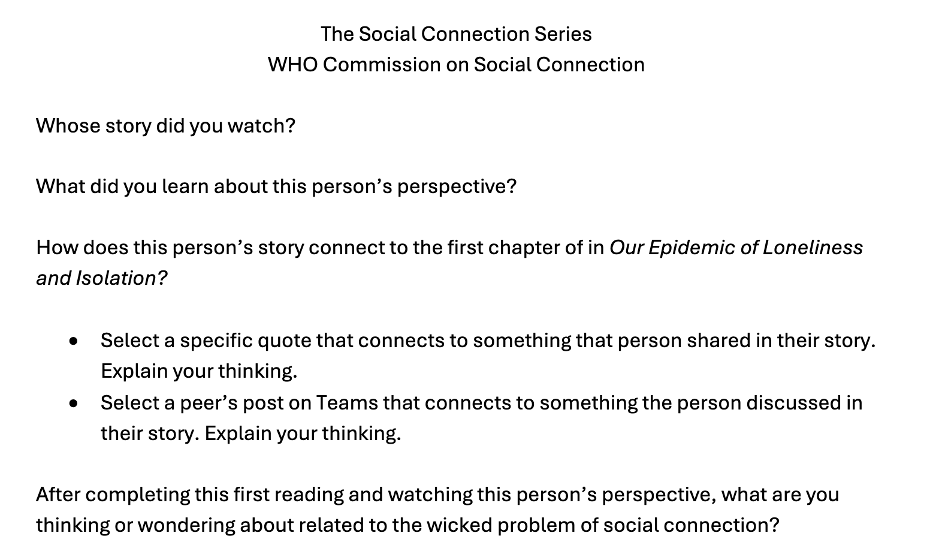
These posts provided an entry point for our discussions. Students could learn from each other by reading these ideas or use them to highlight the key points from the author. In addition, I revised the class activities to provide more ways for the students to understand the complexity of the problem. For instance, students explored the video series from the World Health Organization (WHO) Commission on Social Connection. This provided them with the opportunity to consider how different individuals are impacted by the epidemic of loneliness. Students self-selected a perspective they wanted to learn about and then watched the video to learn more about this person’s point of view. Students engaged in group discussion in two ways, first with people that watched the same video and then with people that learned about different perspectives. These conversations allowed them to consider key elements of social connection as well as begin to think about integrated perspective or developing an empathetic point of view on the problem. Below are the prompts students considered during this activity.
The final element that I included focused on helping students to think about the various ways that people, organizations, and communities are trying to address this wicked problem. I provided the students a list of programs/initiatives and then they selected one to learn more about. In small groups, they researched the idea and then created a short presentation to share with the class. This activity embedded many different elements important to the project work we would do later in the semester. It allowed students to develop skills of collaboration and working together to communication a clear understanding of their ideas. This also gave them the chance to consider a variety of ways that social connection could be addressed.
Play is another element that I included in the course. In my first iteration, we used play as an academic component of the course. The playful activities related back to the content of the course. This semester I decided to lean into the play and focus on games that allowed students to take a break from the content. We played a game every class for about 5-10 minutes. The games varied and often were simple such as Scattegories, Jenga, and Two Truths and a Lie. This gave students time to connect with each other in a nonacademic activity. Early in the semester, I shared with students the benefits of play for adults.
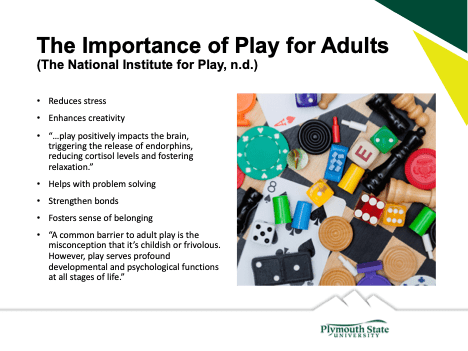
This information helped them to consider why we would dedicate time for play this semester. Many of the students wrote about these experiences in their reflections highlighting the importance of playing to gain connection but also providing them the opportunity to build skills within the Habits of Mind such as problem solving and purposeful communication.
Once students form project groups, we begin our discussions of Design Thinking. This human-centered designed process helps students to focus on more than research for their project work and allows them to consider how to create solutions that focus on what might be useful for stakeholders. This semester I revised the activities to help students think more concretely about how they were applying the Design Thinking elements to their project work. See below for how students reflected on Define the Problem.
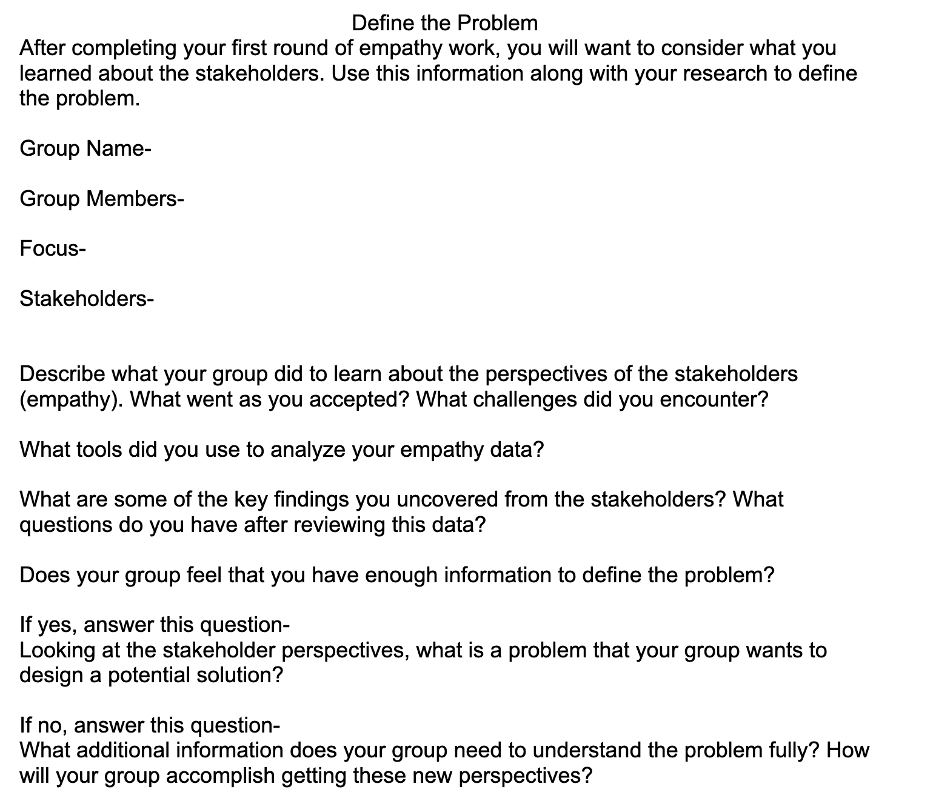
These group reflections gave me the opportunity to support individual groups as they worked on their project. Some groups needed help understanding the Design Thinking process and how this work is different from a typical research project. These mini-check-ins along the way allowed me to provide appropriate feedback and help students before moving to the next step in the process.
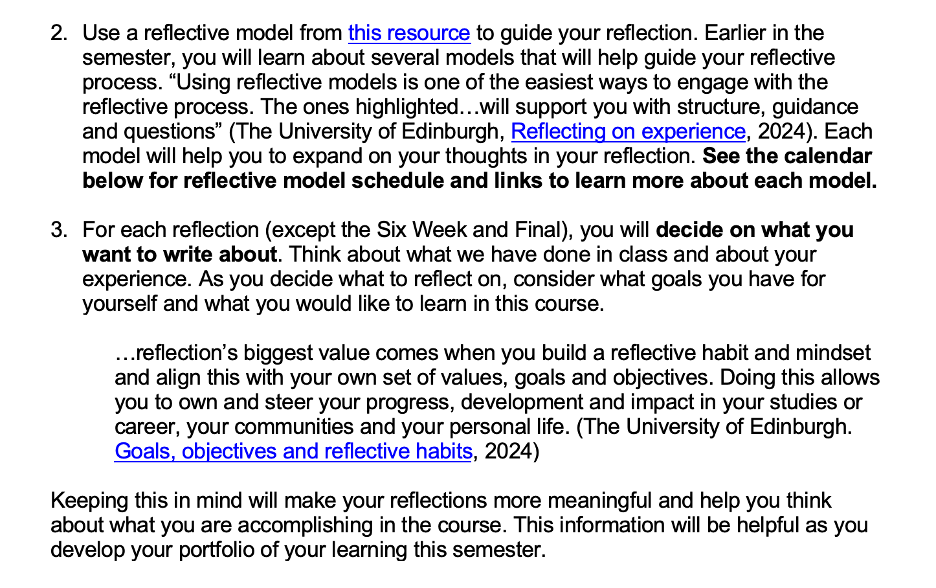
The last two changes focused on supporting students in articulating their learning in the course. Reflection is a key element that I have used in the past but always found that students struggled with how to expand on their ideas. The resource, Toolkit: Reflective & Equitable Ungrading for PBL, helped me to explore new ways to support students in the reflective process. I used this in the spring in my Signature Project course and decided to use a scale down version in TWP. I decided to focus on the reflective models and use these to help students to consider how to write more thoughtfully about their learning. See excerpt below of the assignment guidelines for these reflections.
The other change provided students with the opportunity to reflect on their learning more holistically. Students developed portfolios to articulate how they developed the Habits of Mind, an understanding of the wicked problem, new skills in information literacy, and how they used the Design Thinking Process. This assignment was a new one for this course and I didn’t know what to expect. Overall, I think that this activity allowed students to highlight more about their learning and put together several different elements of the course together and tell their story.
Overall, I think that I met many of my goals for this iteration of the course. Students knew more about the wicked problem and were able to articulate better their learning in the course. I see that there are places for continued development such as the initial introduction of the reflection models and portfolio. The other element that I am considering relates to the project work. I am still thinking about how students might get to more in-depth ideas as they work to address the wicked problem. One idea that I would like to explore is looking for opportunities ahead of the semester and then students could choose from a list of options. Would this help them develop more complex ideas?